
Excerpted from Migraine Brains and Bodies by C. M. Shifflett.
|
Sternocleidomastoid Gr. sternon, breastbone + kleid-, collarbone + mastoeidês, breast-shaped
|
What It Is and What It Does
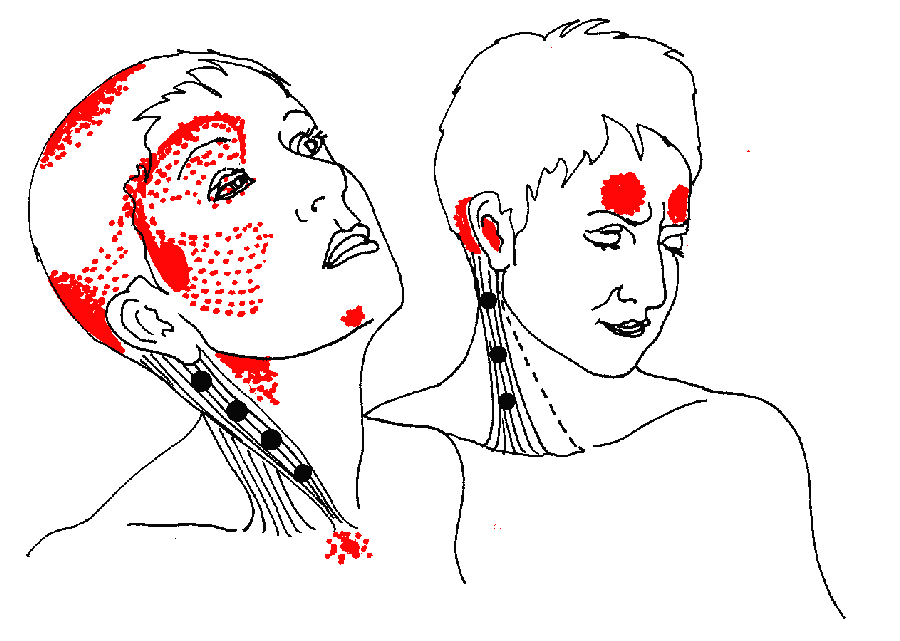
Sternocleidomastoid (SCM) is the big ropey muscle that runs from the mastoid process (the rounded bump behind your ear) to the joint between collarbones and sternum at the base of your throat. This paired muscle pulls the head forward and down, and acts as a checkrein to prevent the head from falling backward. Both of these actions are involved in rolling where you must tuck the head for safety.What Goes Wrong
When the SCM is strained or shortened the muscle itself rarely hurts, no matter how stiff or tight it may be. Problems are referred elsewhere, to head and neck, ears, eyes, nose and throat. The astonishing laundry-list of pain and dysfunction includes severe dizziness and other neurological symptoms. These may be mistakenly diagnosed as migraine, sinus headache, atypical facial neuralgia, trigeminal neuralgia, arthritis of the sternoclavicular joint, ataxia, multiple sclerosis (MS), brain lesions, tumors, and other frightening conditions. As always, these possibilities should be eliminated through differential diagnosis. However, because of its intimate relationship with the brain stem and cranial nerves (accessory nerve, CN XI and the vagus nerve, CN X), the SCM can produce many neurological disturbances all on its own. One is a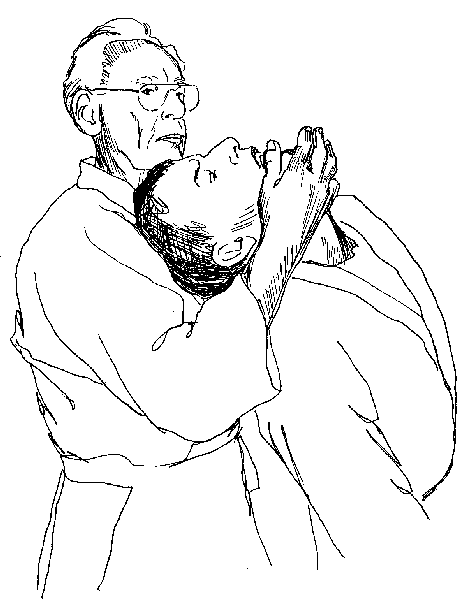 condition known as “postural dizziness” —- just walking around feeling
dizzy and disoriented -— perhaps with a frontal headache
commonly interpreted as “sinus” pain.
condition known as “postural dizziness” —- just walking around feeling
dizzy and disoriented -— perhaps with a frontal headache
commonly interpreted as “sinus” pain. A common complaint in beginning Aikido or Judo is dizziness and nausea while rolling. This may be due to disorienting unfamiliar movements. It may also be due to a tight SCM, possibly strained long before arriving at the dojo by poor posture, chest breathing, or car accidents.
At the dojo SCM is commonly strained by locks and pins and in rolling. SCM is critical for tucking the head which may be overdone by beginners. (Holding the head in the same position at the office will produce a nasty “word processor” headache.) More advanced students may suffer as well; when taking throws from beginners they often fling the head back then forward into a side-tucked position. This motion provides the energy and inertia needed for safety in the coming fall but it can also strain the SCM, a sort of self-induced whiplash injury. Avoid the fling, and learn to treat the injury.
Testing and Treating
The SCM is easily tested simply by grasping the body of the muscle. Be sure to grasp the muscle, not just the skin. In healthy athletic persons, this muscle will be much larger and deeper than you think. In some it will be rock hard, unbelievably tight and therefore easy for a novice to confuse with the more flexible overlying skin. A tense muscle subjected to a firm but gentle squeeze will be painful, and may produce the referred pain pattern. A relaxed SCM will perceive the squeeze as pressure, but will not be painful. To treat,- Look for a tender spot at the mastoid process, the
bump behind the ear. Apply gentle pressure until perception of “pain” or
“tenderness” decreases to “pressure” only.
- Repeat down the muscle until you reach the point where you can actually grasp the muscle between thumb and index finger. Using thumb and the side of finger as shown, grasp muscle and squeeze gently.
- Continue working downward to the sternum, feeling around the inside of the notch for tender points.
- Note that
the clavicular division of the muscle extends out to the medial third of
the collarbone. Look for tender spots there as well.
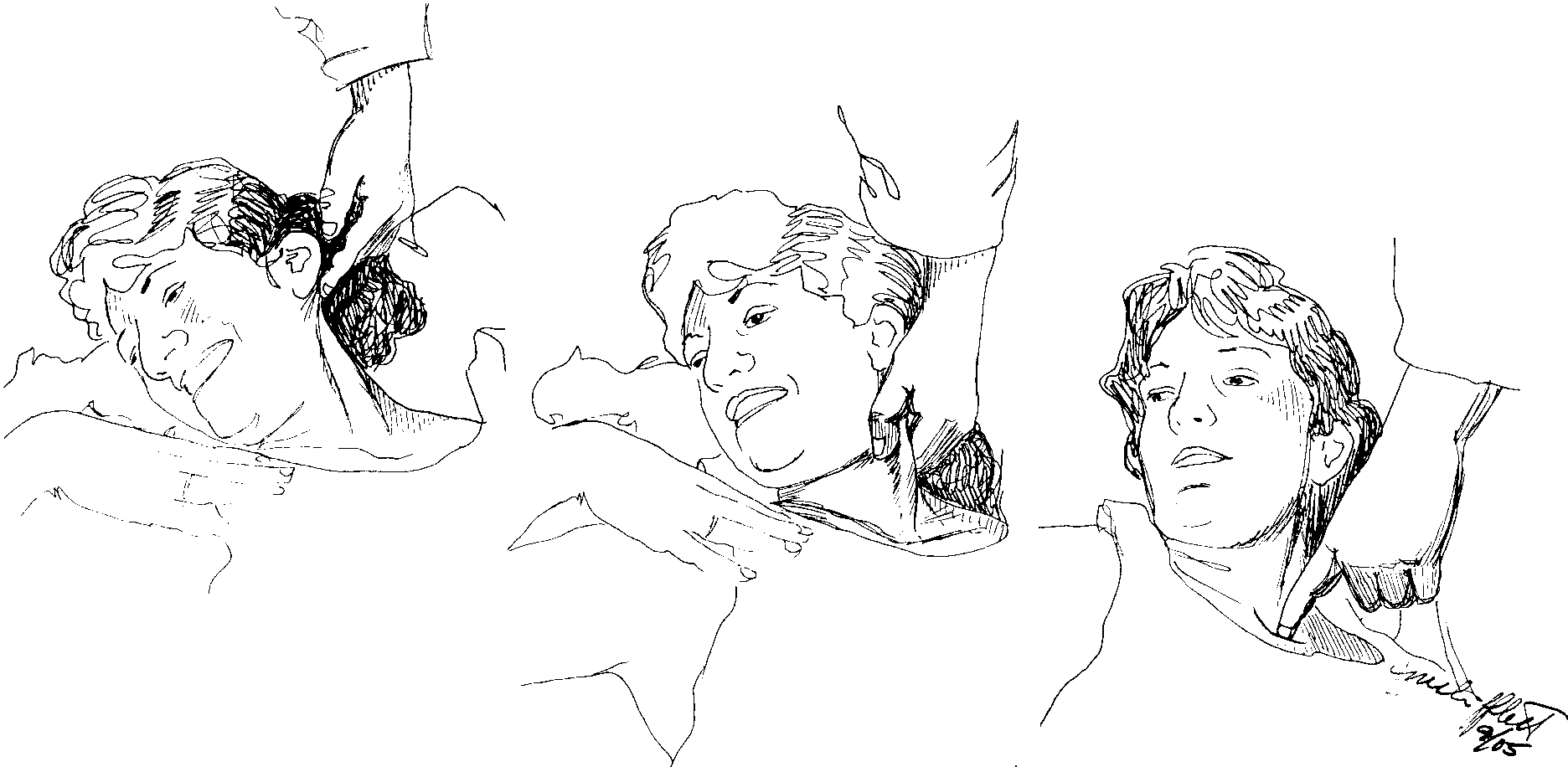
- Stretch gently to return muscle to its proper resting length. Use passive stretch, that is, move your head with your hand; don't try to stretch the muscle by tightening its partner on the other side. To stretch,
- Sternal division: Turn the head
fully to side of the muscle to be stretched, tipping chin downward towards the
shoulder. (This may seem backwards, but it increases the distance between
sternum and mastoid process.) Hold for just a few seconds and return to neutral
position.
- Clavicular division: Turn head to side opposite the muscle being treated and raise the chin.
Details
Attachments: Sternal Division: Lateral surface of mastoid process / front of manubrium
Clavicular Division: Lateral surface of mastoid process / upper border of the front of clavicle.
Action: Flexes neck and head forward, bringing chin to chest. Flexes neck sideways, bringing ear to shoulder. Stabilizes head (as a “check-rein) when tilting chin upward, or during talking and chewing. Assists in swallowing.
As an accessory muscle of respiration, SCM lifts upper ribs in breathing when neck is erect or hyper-extended (not when head is bowed).
Entrapments: May entrap entrap its own nerve supply (accessory or CN XI) en route to trapezius causing weakness in trapezius or torticollis of muscular origin. CN XI motor fibers intermingle with those of the vagus.
Symptoms: Sternal Division. Pain referred upward to cheek and sinuses, occiput, eye (orbicularis), top of head; pain referred downward to sternum. Tearing of eye, visual disturbances when viewing parallel lines. Chronic “sore throat” when swallowing, possibly with a chronic dry cough.
Clavicular Division: Pain referred bilaterally across forehead; frontal sinus-like headache, ear ache, nausea, dizziness, car-sickness, faulty weight perception of held objects, and hearing loss (reversible).
Strained by: Whiplash injuries, structural faults (short leg or small hemi-pelvis), overhead painting, carpentry, wallpapering; horseback riding, front-row movie seats, coughing, chest breathing, working for long-periods with head turned to one side (“word-processor headache”). It is also irritated / compressed by tight collar or tie.